Never Split the Difference
Chris Voss
How to Win Friends and Influence People
Dale Carnegie
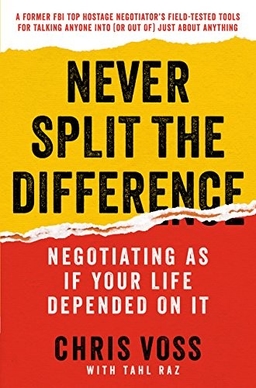
Never Split the Difference
Chris Voss
- Pages
- 274
- Focus
- An FBI lead international kidnapping negotiator reveals the techniques he used to talk terrorists out of killing hostages — and shows you how to use them to negotiate a raise, buy a car, or settle a contract. 'Tactical empathy,' 'mirroring,' 'calibrated questions,' 'the late-night FM DJ voice.' These aren't corporate buzzwords — they were tested when lives were on the line.
- Best for
- Anyone who hates negotiating (which is almost everyone). Especially powerful for people who think of themselves as 'bad at confrontation' — Voss's methods are designed to get what you want WITHOUT confrontation. Also: the single best book for salary negotiations, real estate deals, and difficult conversations with your boss.
- Style
- Tactical
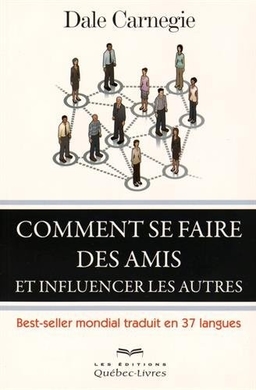
How to Win Friends and Influence People
Dale Carnegie
- Pages
- 288
- Focus
- Published in 1936 and still the most-read interpersonal skills book in history. Carnegie's insight was simple and radical: people don't care about your arguments — they care about whether you make them feel important. 30 million copies sold. Warren Buffett took the Dale Carnegie course at age 20 and says it changed his life more than his Columbia MBA.
- Best for
- Anyone who works with humans (so, everyone). The principles are so foundational that most modern communication books are footnotes to Carnegie. If you've ever struggled to convince someone of anything — your partner, your boss, your client — this 90-year-old book still has the answer.
- Style
- Foundational
Similarities
- Both teach the same fundamental insight: the key to influence is making the other person feel HEARD. Voss calls it 'tactical empathy.' Carnegie calls it 'becoming genuinely interested in other people.' Different vocabulary, identical principle. The best negotiators and the most likable people both start by listening
- Both are built on real stories, not theory — Voss uses hostage negotiations (bank robberies, kidnappings, terrorist standoffs). Carnegie uses stories from Lincoln, Teddy Roosevelt, and everyday businesspeople. In both books, every technique comes with proof that it works under pressure
- Both have sold tens of millions of copies and remain the two most-recommended 'people skills' books of all time — they've outlasted every competitor because the advice actually works. Ask any CEO, salesperson, or therapist for their top two books on influence, and these will be the answer
- Both were written by people who started from a position of weakness — Voss was a beat cop from Iowa who talked his way into the FBI's crisis negotiation unit. Carnegie was a failed actor from rural Missouri who became the most influential communication teacher of the 20th century. Neither started with natural charisma; both reverse-engineered it
- Both will make you better at every conversation you have for the rest of your life — not just negotiations or sales pitches, but arguments with your partner, conversations with your kids, interactions with customer service. These are life-operating-system upgrades disguised as business books
Differences
- Carnegie teaches you how to be LIKED. Voss teaches you how to WIN. Carnegie's philosophy: 'If you make people feel important, they'll give you what you want voluntarily.' Voss's philosophy: 'If you understand people's real motivations, you can steer them toward your outcome without them feeling steered.' One builds goodwill; the other directs it
- Carnegie avoids confrontation entirely — his number one rule is 'never criticize, condemn, or complain.' He believes harmony is the path to influence. Voss USES confrontation strategically — his technique of labeling negative emotions ('It seems like you're frustrated') actually increases trust by proving you understand the other side. Carnegie steps around conflict; Voss walks through it
- Carnegie was written in 1936 for a world of face-to-face business, handshake deals, and long-term relationships. Voss was written in 2016 for a world of email negotiations, one-shot deals, and counterparts who may be actively trying to exploit you. Carnegie assumes good faith. Voss prepares you for bad faith. This is the biggest practical difference
- Carnegie gives you PRINCIPLES (be a good listener, talk in terms of the other person's interests, let the other person feel the idea is theirs). Voss gives you TECHNIQUES with specific scripts ('How am I supposed to do that?' instead of 'No'; 'That's right' as the two most powerful words in negotiation; the 7-38-55 rule of communication). Carnegie is philosophy; Voss is an instruction manual
- Carnegie changes who you ARE — readers genuinely become warmer, more curious, and more generous in their interactions. Voss changes what you DO — readers learn specific moves they can deploy in specific situations. One is character development; the other is skills training. The ideal person has both, which is why you should read both
Our Verdict
Read How to Win Friends first. Yes, it was written 90 years ago. Yes, some examples feel dated. But the core principles — listen more than you talk, make people feel important, never say 'you're wrong' — are so fundamental that every communication book since is a remix. Carnegie doesn't just teach you to influence people; he teaches you to actually care about them, which is the only form of influence that lasts. Then read Never Split the Difference for situations where warmth alone isn't enough — salary negotiations, business deals, difficult clients, situations where someone is actively trying to take advantage of you. Voss's tactical toolkit (mirroring, calibrated questions, the accusation audit, the late-night FM DJ voice) is the most practical set of influence techniques ever published. Carnegie makes you someone people want to say yes to. Voss makes you someone who knows how to get the yes. Together: about 10 hours. The two most important books on human influence ever written, and they complement each other perfectly.