Understanding Anxiety
A journey from the biology of fear to practical mastery over anxious thoughts — each book layers a new lens so you stop fighting anxiety and start understanding it.
My Age of Anxiety
Scott Stossel
Why read this now
You start here because Stossel's deeply personal memoir normalizes anxiety before you intellectualize it. He weaves his own lifelong struggle with the history of how we've understood anxiety across centuries, so you enter the topic with empathy rather than clinical distance.
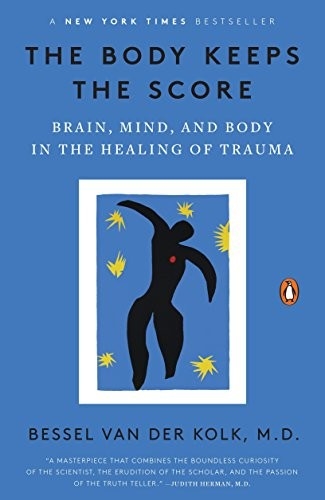
The Body Keeps the Score
Bessel van der Kolk
Why read this now
Now that Stossel showed you what anxiety feels like from the inside, van der Kolk explains what's happening in your nervous system. This is the science layer — trauma, stress responses, and why your body remembers what your mind tries to forget. It reframes anxiety as a physical phenomenon, not just a mental one.
Anxious
Joseph LeDoux
Why read this now
LeDoux is the neuroscientist who mapped the brain's fear circuits. After van der Kolk showed you the body's role, LeDoux takes you deeper into the amygdala, threat detection, and why conscious worry and unconscious fear are different systems. This is the book that makes you stop saying 'it's all in my head' — because it literally isn't.
When Panic Attacks
David D. Burns
Why read this now
You've understood the history, the body, and the brain — now Burns hands you the toolkit. His CBT techniques are the most practical in the field, and they land harder because you now know why cognitive distortions hijack your nervous system. Without the earlier books, this would feel like a self-help manual; with them, it feels like engineering.
Dare
Barry McDonagh
Why read this now
Burns gave you CBT tools to challenge anxious thoughts; McDonagh offers the radical opposite — stop fighting anxiety entirely and run toward it. This counterintuitive approach works precisely because you now understand the fear circuits from LeDoux and the body responses from van der Kolk. You close the path not by defeating anxiety but by changing your relationship with it.
Track Your Reading Path
Use ReadShelf to track your progress through any reading path. See how far you've come.
Start Reading