All comparisonsVS
Thinking, Fast and Slow
Daniel Kahneman
Noise: A Flaw in Human Judgment
Daniel Kahneman, Olivier Sibony, Cass R. Sunstein
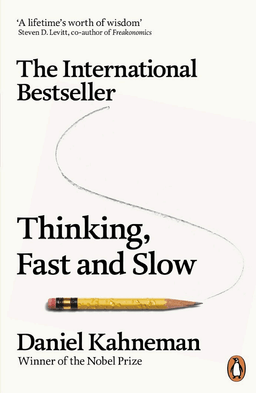
Thinking, Fast and Slow
Daniel Kahneman
- Pages
- 499
- Focus
- A comprehensive tour of the two systems that drive human thought — intuitive and deliberate — and the predictable biases each produces.
- Best for
- Anyone who wants to understand why smart people make dumb decisions, and how to catch themselves doing it.
- Style
- Scientific
Noise: A Flaw in Human Judgment
Daniel Kahneman, Olivier Sibony, Cass R. Sunstein
- Pages
- 464
- Focus
- The overlooked problem of inconsistency in human judgment — why two judges, doctors, or managers given identical information reach wildly different conclusions.
- Best for
- Leaders, managers, and anyone in a decision-making role who wants to understand why their organization's judgments are less consistent than they think.
- Style
- Scientific
Similarities
- Both are grounded in decades of empirical research on how human judgment fails in systematic, measurable ways
- Both argue that people are far more confident in their judgments than the evidence warrants
- Both offer concrete strategies — decision hygiene, structured processes — to reduce errors in professional settings
Differences
- Thinking, Fast and Slow focuses on bias (predictable errors in one direction); Noise focuses on variability (unpredictable scatter in all directions) — fundamentally different problems requiring different solutions
- The first book is a solo intellectual memoir spanning Kahneman's entire career; Noise is a three-author collaboration that reads more like a structured argument with corporate applications
- Thinking, Fast and Slow has broad life applicability — shopping, relationships, investing; Noise is narrower and most powerful for organizational and institutional decision-making
Our Verdict
Read Thinking, Fast and Slow first — it's the masterwork and it changed how the world understands the mind. Noise is the important but less thrilling sequel that fills a genuine gap. If you manage people or make high-stakes decisions professionally, Noise becomes essential rather than optional.
Read both: 21 hours