The Subtle Art of Not Giving a F*ck
Mark Manson
The Power of Now
Eckhart Tolle
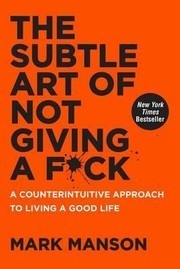
The Subtle Art of Not Giving a F*ck
Mark Manson
- Pages
- 224
- Focus
- You're going to die. You can't be great at everything. Life is fundamentally unfair. Now — armed with those truths — choose what to give a f*ck about, because you only get a limited number. Mark Manson's antidote to the toxic positivity industrial complex. 14 million copies sold. The self-help book for people who hate self-help books.
- Best for
- Anyone drowning in Instagram inspiration quotes who feels worse, not better. People in their 20s and 30s who were told they could be anything and are now paralyzed by the pressure. Anyone who needs to hear: 'You're not special, and that's okay — in fact, that's where freedom begins.'
- Style
- Brutally honest
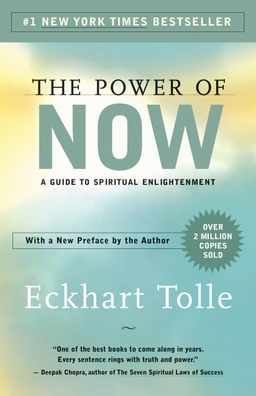
The Power of Now
Eckhart Tolle
- Pages
- 236
- Focus
- At age 29, Eckhart Tolle was suicidal. Then, one night, something shifted — he experienced a dissolution of his sense of self and woke up in a state of profound peace that never left. The Power of Now is his attempt to guide you to the same place: beyond the voice in your head, beyond past and future, into the present moment where suffering cannot exist. 5 million copies sold. Recommended by Oprah, which turned it from a niche spiritual text into a global phenomenon.
- Best for
- Anyone whose mind won't shut up — the 3am anxiety loop, the constant replay of past mistakes, the dread about tomorrow. People who've tried meditation and couldn't sit still. Anyone who suspects that the voice narrating their life might actually be the source of their unhappiness. This book won't teach you to think better — it will teach you to think less.
- Style
- Transcendent
Similarities
- Both diagnose the same disease: your mind is making you miserable. Manson says it's because you care about the wrong things. Tolle says it's because you're identified with your thoughts instead of observing them. Different explanations, same patient — a person lying awake at 2am, trapped in their own head
- Both reject the 'more is better' narrative — Manson says stop chasing more success, more approval, more status. Tolle says stop chasing more thoughts, more plans, more mental activity. Both argue that the path to peace is subtraction, not addition. Less caring (Manson) or less thinking (Tolle)
- Both became massive bestsellers by promising the opposite of what self-help usually promises — not 'here's how to achieve everything' but 'here's how to stop needing to.' Subtle Art: 14M copies. Power of Now: 5M copies. Together they represent the two most popular alternatives to hustle culture
- Both are personal — Manson writes about his friend's death, his struggles with meaning, and his realization that choosing your suffering is the only freedom. Tolle writes about his breakdown and awakening. Both books have emotional cores that prevent them from being purely philosophical
- Both have cult-like followings and equally passionate critics — Manson is accused of repackaging Stoicism with swear words. Tolle is accused of being vague and cultish. Both criticisms have merit. Both books changed millions of lives anyway
Differences
- Manson says: CHOOSE better values. The problem isn't that you care — it's that you care about the wrong things (fame, pleasure, being right). Replace those with better values (honesty, courage, contribution) and suffering becomes meaningful. Tolle says: TRANSCEND values entirely. The problem isn't what you think about — it's that you think compulsively. Stop identifying with the thinker and suffering dissolves. One reforms the mind; the other escapes it
- Manson is a PHILOSOPHER — his influences are Stoicism (Marcus Aurelius), existentialism (Camus, Kierkegaard), and Buddhism-lite. He builds logical arguments. You can agree or disagree with each point. Tolle is a MYSTIC — his influences are Zen, Advaita Vedanta, and Meister Eckhart. He describes experiences. You either recognize what he's pointing at or you don't. One is a debate; the other is a finger pointing at the moon
- The Subtle Art is FUNNY — genuinely, laugh-out-loud funny. Manson's voice is that friend who calls you on your bullshit over beers. The Power of Now is SERENE — Tolle writes like someone who has already arrived somewhere and is calmly describing the view. One makes you smirk; the other makes you breathe slower. Your preference says something about what you need right now
- Manson's book works immediately — you'll finish it in a weekend and Monday morning you'll catch yourself giving fewer f*cks about things that don't matter. Tolle's book works slowly — or not at all, if you're not ready. Some people read it three times before it 'clicks.' Others never connect with it. Subtle Art is aspirin; Power of Now is meditation — one works for everyone, the other works profoundly for some
- Manson accepts suffering as inherent to life — 'Life is essentially an endless series of problems. The solution to one problem is merely the creation of another.' Tolle rejects suffering as a mental construction — 'Suffering is created by your mind. It's not real.' This is the fundamental split: Manson says pain is real, choose it wisely. Tolle says pain is real, but suffering is optional
Our Verdict
Read The Subtle Art first if you're a skeptic, an overthinker, or someone who finds spiritual books fluffy. It meets you exactly where you are — frustrated, confused, probably on your phone at midnight — and gives you a framework that works before you believe in it. It's the gateway drug to thinking about what actually matters. Read The Power of Now first if you've already done the intellectual work and need something deeper. If you've read all the productivity books, optimized all the habits, achieved the goals... and STILL feel empty. Tolle's message — that peace isn't something you achieve but something you stop blocking — is either the most important thing you'll ever hear or complete nonsense. There's no middle ground, and that's what makes it powerful. Together: about 8 hours. Two completely different maps to the same destination — a life where you stop fighting yourself.