Shoe Dog
Phil Knight
The Hard Thing About Hard Things
Ben Horowitz
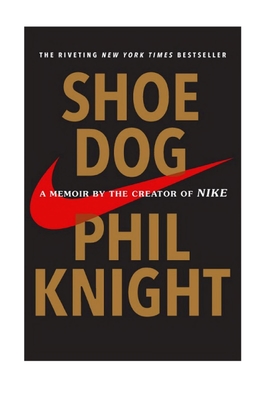
Shoe Dog
Phil Knight
- Pages
- 400
- Focus
- Phil Knight was 24, fresh out of Stanford business school, with $50 borrowed from his father and a crazy idea: import Japanese running shoes and sell them from the trunk of his car. That company became Nike — now worth $170 billion. But this isn't a victory lap. Knight writes about the years when Nike almost died every month: the banks threatening to cut credit, the partners suing, the nights he couldn't make payroll. The most honest founder memoir ever written.
- Best for
- Founders in the first five years — when everything is held together with duct tape and desperation. Anyone who thinks successful companies are built by geniuses with a plan. (They're not. They're built by stubborn people who refused to quit when any sane person would have.) Also: one of the best-written business books in existence — Knight writes like a novelist, not a CEO.
- Style
- Vulnerable
The Hard Thing About Hard Things
Ben Horowitz
- Pages
- 304
- Focus
- There's no recipe for building a company. Every situation is new. And the hardest decisions — firing your friend, laying off a third of your team, pivoting away from your original vision — don't have good options, only less-bad ones. Ben Horowitz ran Loudcloud/Opsware through the dot-com crash, nearly went bankrupt multiple times, and eventually sold to HP for $1.6 billion. This book is the manual for surviving as a CEO when everything is on fire.
- Best for
- CEOs, founders, and managers who are currently in the shit — not the inspirational, everything-is-awesome shit, but the real shit: you're about to miss payroll, your best engineer just quit, and the board wants your head. This is the only business book that addresses the emotional reality of leading a company through crisis.
- Style
- Combat-tested
Similarities
- Both are the two most honest founder memoirs ever written — neither is a success story pretending to be a business book. Both are about the years when failure was the most likely outcome, and both describe the psychological cost of leading through that uncertainty with unflinching honesty
- Both reject the mythology of the visionary founder — Knight didn't have a master plan for Nike; he had a weird obsession with shoes and enough stubbornness to survive. Horowitz didn't foresee Opsware's success; he navigated a series of near-death experiences. Both books argue that entrepreneurship is improvisation, not prophecy
- Both describe moments that would make most people quit — Knight facing bankruptcy when his bank froze his credit line. Horowitz telling a room full of employees that their stock was worthless. Both use these moments not as humble-brags but as genuine admissions of terror. You feel the sweat in both books
- Both are beloved by founders not because they're inspiring but because they're VALIDATING — if you're building a company and everything feels like it's falling apart, these books say: 'That's normal. Every great company felt like this. Keep going.' The emotional relief of reading either book if you're a struggling founder is enormous
- Both became required reading in Silicon Valley and stayed there — Shoe Dog is recommended by Warren Buffett, Bill Gates, and every VC who gives founder advice. Hard Thing is recommended by Marc Andreessen, Mark Zuckerberg, and every CEO who's been through a crisis. Together they're the Old and New Testament of startup survival
Differences
- Shoe Dog is a MEMOIR — it reads like a novel. Knight has a gift for scene-setting, character, and narrative tension that most business writers can't touch. You'll forget you're reading a business book. Hard Thing is a MANUAL — it's organized around problems (how to fire a friend, how to lead a layoff, how to manage your own psychology) with specific advice for each. Shoe Dog entertains; Hard Thing instructs
- Knight writes about building Nike over DECADES — from 1962 to the IPO in 1980, covering 18 years of slow, uncertain growth. Horowitz writes about surviving CRISES — specific moments when the company nearly died and he had to make impossible decisions in hours. Shoe Dog is a marathon; Hard Thing is a series of sprints
- The emotional register: Shoe Dog is ROMANTIC — Knight writes about running at dawn, traveling to Japan at 24, the beauty of competition. There's joy alongside the struggle. Hard Thing is BRUTAL — Horowitz opens with contemplating suicide during the dot-com crash. There's no romance, no dawn runs, just the raw psychological warfare of leading through disaster. One is bittersweet; the other is just bitter (and more useful for it)
- Knight is an INTROVERT who built a company through relationships — his partners (Bowerman, Hayes, Woodell) are characters as vivid as any in fiction. The book is as much about friendship and loyalty as it is about business. Horowitz is a CEO writing for other CEOs — the relationships matter, but the focus is on DECISIONS. What to do when there's no good option. Knight gives you a story; Horowitz gives you a toolkit
- Legacy: Shoe Dog is widely considered the greatest business book ever written — and it barely feels like a business book. Hard Thing is widely considered the most USEFUL book for founders in crisis — and it only works when you're in crisis. Read Shoe Dog when you need inspiration. Read Hard Thing when you need survival instructions. Different medicines for different diseases
Our Verdict
Read Shoe Dog first. Even if you never start a company, it's one of the best memoirs you'll ever read — the story of a quiet, uncertain young man who built something that outgrew every dream he ever had. Knight's writing is genuinely beautiful, and the early chapters (traveling alone through Japan at 24, selling shoes from his car, his relationship with his coach Bill Bowerman) are among the most vivid in any business book. You'll finish it wanting to run. Then read Hard Thing when you need it — and you'll know when you need it. It's not a book you read for fun; it's a book you reach for when the walls are closing in. Horowitz's advice on firing, layoffs, and managing your own psychology as a leader is the most practically useful content in any business book ever published. Together: about 13 hours. One teaches you why to start. The other teaches you how to survive.