Rich Dad Poor Dad
Robert Kiyosaki
The Psychology of Money
Morgan Housel
Rich Dad Poor Dad
Robert Kiyosaki
- Pages
- 336
- Focus
- Two fathers, two money philosophies. Kiyosaki's 'rich dad' taught him what schools never do: the difference between assets and liabilities, why the rich don't work for money, and why your house is not an investment. The book that sold 32 million copies and started more side hustles than any MBA program.
- Best for
- Readers stuck in the earn-spend-repeat cycle who need someone to shake them and say: 'The system is designed to keep you working. Here's how to escape.' Best read in your 20s, but the mindset shift hits at any age.
- Style
- Provocative
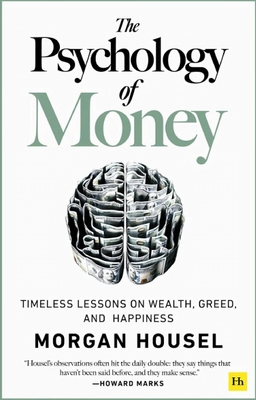
The Psychology of Money
Morgan Housel
- Pages
- 256
- Focus
- Why a janitor can die with $8 million while a Harvard-educated executive goes bankrupt. Housel argues that financial success isn't about what you know — it's about how you behave. 19 short stories about the strange ways people think about money, grounded in history, psychology, and real data.
- Best for
- Anyone who's ever made a dumb money decision and wondered why. Especially powerful for readers who already earn well but can't figure out why they don't feel wealthy. The best personal finance book of the 2020s.
- Style
- Reflective
Similarities
- Both reject the spreadsheet approach to wealth — they argue that financial success is 80% behavior and 20% knowledge, which is why smart people go broke and uneducated immigrants build empires
- Both use real stories instead of formulas — Kiyosaki uses his two fathers as archetypes; Housel uses historical figures like Ronald Read (a janitor who died with $8M) and Richard Fuscone (a Merrill Lynch exec who went bankrupt)
- Both became generation-defining finance books — Rich Dad Poor Dad (1997, 32M+ copies, translated into 51 languages) and Psychology of Money (2020, 4M+ copies, #1 in 30+ countries) are the two books people actually finish and recommend
- Both are written for people who hate finance books — no jargon, no charts, no equations. Your mom could read either one and understand every word
- Both fundamentally changed how millions of people think about money — Rich Dad made 'assets vs liabilities' part of everyday vocabulary; Housel made 'enough' the most powerful word in personal finance
Differences
- Kiyosaki tells you what to DO: buy real estate, start businesses, build assets that generate cash flow. It's a battle plan. Housel tells you how to THINK: understand compounding, respect luck, define 'enough.' It's a philosophy. One gives you a map; the other gives you a compass
- Rich Dad Poor Dad has a controversial relationship with truth — Kiyosaki admits the 'rich dad' may be a composite character, and some of his real estate advice aged poorly. The Psychology of Money is meticulously researched — every claim is backed by data, every story is verifiable. This matters if you're the kind of reader who needs to trust the author
- Kiyosaki sees the world in winners and losers — employees are trapped, business owners are free, and if you're not getting rich, you're not trying hard enough. Housel sees the world in probabilities — some people get rich through skill, some through luck, and the line between the two is thinner than anyone admits. This is the deepest philosophical difference between the books
- Rich Dad was written by a self-made millionaire for people who want to become millionaires. Psychology of Money was written by a financial journalist for people who already have money but keep making irrational decisions with it. Different problems, different audiences, different solutions
- Kiyosaki's core message is 'escape the rat race' — stop trading time for money. Housel's core message is 'the highest form of wealth is the ability to wake up every morning and say: I can do whatever I want today.' One defines freedom as financial independence; the other defines it as autonomy over your time
Our Verdict
Here's the honest take: The Psychology of Money is the better book. It's more honest, more nuanced, and it will change how you think about money for the rest of your life. The story of Ronald Read — a janitor who quietly accumulated $8 million through patience and index funds — is worth more than every chapter of Rich Dad combined. Housel understands something Kiyosaki doesn't: that getting rich and staying rich are completely different skills, and most people fail at the second one. But here's why Rich Dad Poor Dad still matters: it was the first book to tell an entire generation that everything they learned about money in school was wrong. That your salary is not your wealth. That your house is not an asset. That financial literacy is the skill nobody teaches you. Millions of people started their financial journey because of this book, and that matters — even if the advice is sometimes oversimplified. The ideal reading order: Rich Dad Poor Dad first (to break your old thinking), then The Psychology of Money (to build something better in its place). Together they take about 11 hours — and they might be the most profitable 11 hours you ever spend reading.