All comparisonsVS
Range
David Epstein
Outliers
Malcolm Gladwell
Range
David Epstein
- Pages
- 352
- Focus
- David Epstein spent years as a Sports Illustrated writer watching the Tiger Woods narrative — specialize early, practice obsessively, master one domain — become the universal template for success. Then he found the evidence pointing the other way. Roger Federer played seven sports before choosing tennis at 17. Darwin was a generalist who synthesized across biology, geology, and economics. The most impactful scientists are more likely to have arts hobbies. Epstein's argument: in 'wicked' learning environments — complex, unpredictable, without immediate feedback — breadth beats depth. The specialist is optimized for a world that no longer exists. The generalist is built for the world we actually live in.
- Best for
- Anyone who feels guilty about having too many interests and not enough focus. Late starters who abandoned the 10,000-hours narrative. People working in complex fields where the rules keep changing. Anyone who was told to specialize earlier and has spent years wondering if they made a mistake.
- Style
- Counterintuitive
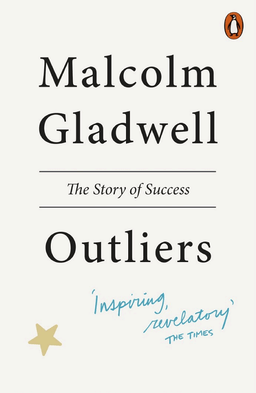
Outliers
Malcolm Gladwell
- Pages
- 309
- Focus
- Malcolm Gladwell asked the most seductive question in popular nonfiction: what do the most successful people have in common? His answer upended the myth of the self-made genius. The Beatles played 10,000 hours in Hamburg clubs before they were famous. Bill Gates had extraordinary access to a computer terminal in 1968, when almost nobody did. The best Canadian hockey players are disproportionately born in January — because of youth league cutoff dates. Success, Gladwell argues, is not the product of individual talent alone. It's the product of hidden advantages, timing, culture, and accumulated practice that we systematically misattribute to genius. One of the best-selling nonfiction books of the 21st century.
- Best for
- Anyone who has ever wondered why some people seem to effortlessly succeed while others with equal talent don't. People interested in the sociology of success and the invisible systems that shape outcomes. Readers who want their assumptions about meritocracy and individual genius productively disturbed.
- Style
- Narrative
Similarities
- Success isn't what you think. Both books attack the naive view that success = talent + hard work. Epstein shows context and breadth matter. Gladwell shows timing and hidden advantages matter. Neither is a comforting message for pure meritocrats.
- The expert is overrated. Both push back against the cultural worship of the narrow specialist and the prodigy. Epstein's generalists and Gladwell's culturally-advantaged achievers both complicate the Tiger Woods / lone genius narrative.
- Accessible science journalism. Both are written by journalists who synthesize research into compelling narratives. Both use vivid case studies over equations. Both feel like revelations on the first read.
Differences
- Prescriptive vs descriptive. Range tells you what to do: sample widely, embrace the generalist path, don't specialize too early. Outliers describes how success has worked historically, but offers little personal guidance. One is a strategy; the other is a portrait.
- Individual vs systemic. Range focuses on the individual: what kind of learning path produces the best outcomes for you? Outliers focuses on society: what systemic factors produce success at a population level? Very different units of analysis.
- Optimistic vs sobering. Range is ultimately empowering — your messy, nonlinear path might be an advantage. Outliers is more sobering — much of success depends on circumstances you didn't choose and can't control.
Our Verdict
Read Outliers first — it dismantles the myth of self-made success and resets your understanding of how achievement actually works. Then read Range to discover what you can actually do about it: that a winding, curious, generalist path is not a liability — it might be exactly what the modern world needs. Gladwell diagnoses the system. Epstein shows you how to thrive within it anyway.
Read both: 12 hours