The Lord of the Rings
J.R.R. Tolkien
A Game of Thrones
George R.R. Martin
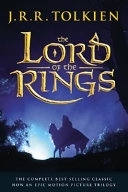
The Lord of the Rings
J.R.R. Tolkien
- Pages
- 1178
- Focus
- The book that invented modern fantasy. An Oxford professor who created entire languages built Middle-earth — a world so detailed it has its own calendars, genealogies, and 7,000 years of history. At the center: a hobbit carrying the most dangerous object in existence across a dying continent to unmake it in the fires where it was forged. 150 million copies sold. Peter Jackson's films ($2.9B). The work against which all fantasy is measured.
- Best for
- Readers who want to disappear into the most complete imaginary world ever created. If you crave beauty, nobility, and the feeling that good can triumph over darkness — even at terrible cost — this is the book. Not fast-paced; it earns its rewards through patience.
- Style
- Mythic
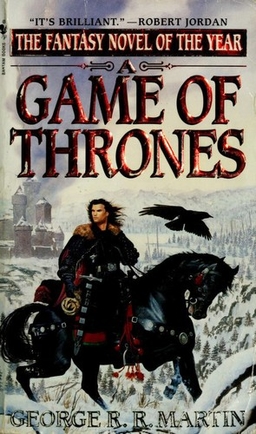
A Game of Thrones
George R.R. Martin
- Pages
- 694
- Focus
- Nobody is safe. The hero you love will die on page 300. The villain you hate will sit on the throne. George R.R. Martin ripped up the fantasy rulebook that Tolkien wrote and replaced it with political realism, moral ambiguity, and consequences. No chosen ones, no divine providence — just power, betrayal, and the people ruthless enough to survive. 90 million copies of the series sold. HBO's adaptation ($30M per episode) changed television forever.
- Best for
- Readers who found Tolkien too clean, too noble, too predictable. Anyone who loves political intrigue, complex morality, and characters so real you hate them and root for them simultaneously. Warning: you will develop opinions about fictional succession law.
- Style
- Ruthless
Similarities
- Both are the two most important fantasy series of all time — Tolkien invented the genre (1954); Martin reinvented it (1996). Every fantasy author since exists in the space between them. If you've read any fantasy, you've read books influenced by one or both
- Both are built on the same foundation — medieval European-inspired worlds with complex political systems, feudal hierarchies, and the constant threat of a greater evil beyond the human squabbles. Both take feudalism seriously as a system, not just as window dressing
- Both became era-defining screen adaptations — Peter Jackson's Lord of the Rings ($2.9B, 17 Oscars) and HBO's Game of Thrones (the most-watched show of the 2010s). Both proved that 'unfilmable' fantasy could be the biggest entertainment on earth
- Both demand commitment and reward it — Lord of the Rings is 1,178 pages of dense prose with songs and appendices. A Game of Thrones is 694 pages and the first of five (eventually seven?) doorstop novels. Neither is beach reading. Both are lifetime reading
- Both take war seriously — not as glorious adventure but as something that breaks people and reshapes civilizations. Tolkien wrote from his experience in the trenches of WWI. Martin wrote in reaction to the Vietnam War and America's romantic view of medieval conflict. Both understood that real war is hell
Differences
- Tolkien wrote MYTH — his characters are archetypes (the wise wizard, the reluctant hero, the fallen king restored). His world has a clear moral structure: good and evil exist, and the right side wins, though at great sacrifice. Martin wrote HISTORY — his characters are politicians, schemers, survivors. His world has no moral structure: good people die, bad people prosper, and 'the right side' is whoever has the army
- Death works differently. In Tolkien, death is meaningful — Boromir's death redeems him, Théoden dies as a king should. You mourn, but there's nobility. In Martin, death is SHOCKING — Ned Stark, the apparent protagonist, is executed in book one. The Red Wedding kills characters you've followed for 1,000 pages. Death in Martin isn't noble; it's political. This single difference defines the two approaches to fantasy
- The prose: Tolkien writes with the cadence of ancient epic poetry — deliberately archaic, musical, sometimes slow. 'The world is changed. I feel it in the water. I feel it in the earth. I smell it in the air.' Martin writes like a modern novelist — visceral, immediate, often brutal. 'When you play the game of thrones, you win or you die. There is no middle ground.' One is a cathedral; the other is a battlefield
- Morality: Tolkien's world has GOOD and EVIL — Gandalf is good, Sauron is evil, and the line between them is clear. The struggle is to resist corruption, not to define it. Martin's world has INTERESTS — Cersei protects her children, Tyrion wants respect, Littlefinger wants power. Nobody is purely good or evil; everyone is serving their own survival. Tolkien asks: will you resist the Ring? Martin asks: what would YOU do with the Ring?
- Completion: Tolkien FINISHED. Lord of the Rings is complete, polished, and has a definitive ending. Martin has NOT finished — A Song of Ice and Fire has been incomplete since 2011, with two books still unwritten and fans increasingly doubtful they'll ever arrive. This matters: Tolkien delivered a complete masterpiece. Martin delivered a brilliant beginning that may never have an end
Our Verdict
This is the great schism of fantasy literature, and your preference reveals something about you. If you believe in heroism, sacrifice, and the possibility that good can triumph — read Lord of the Rings. Tolkien's vision is unfashionable in its sincerity, and that's exactly what makes it powerful. In a cynical world, Middle-earth offers genuine nobility. You'll finish it feeling elevated. If you believe that the world is complicated, power corrupts everyone, and the only honest story is one where the hero can die — read A Game of Thrones. Martin's vision is uncomfortable in its realism, and that's what makes it addictive. You'll finish it trusting no one and loving every page. The ideal order: Lord of the Rings first (to understand what fantasy CAN be), then Game of Thrones (to see what happens when someone tears that vision apart). Together: about 34 hours. The two poles of the genre that contains all other genres.