The Lean Startup
Eric Ries
Zero to One
Peter Thiel
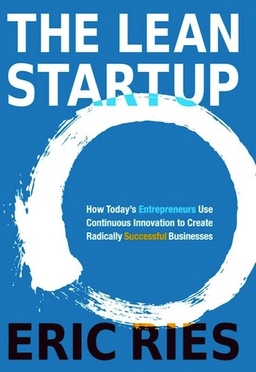
The Lean Startup
Eric Ries
- Pages
- 336
- Focus
- Don't build what nobody wants. Eric Ries watched startups (including his own) burn millions on products customers didn't need, and created a methodology to stop the bleeding: Build a Minimum Viable Product, measure what happens, learn, repeat. The book that made 'pivot' a business verb and 'MVP' the most important three letters in Silicon Valley.
- Best for
- Founders with an idea who don't know if it's good yet. Product managers drowning in feature requests. Anyone who's ever spent six months building something only to discover nobody cares. This book will save you time, money, and heartbreak — but only if you're willing to hear that your idea might be wrong.
- Style
- Scientific
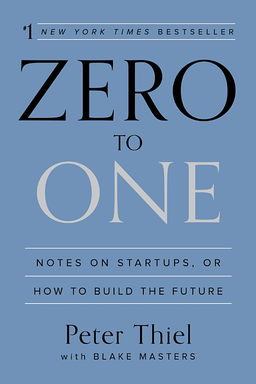
Zero to One
Peter Thiel
- Pages
- 224
- Focus
- Forget competing. Build a monopoly. Peter Thiel — PayPal co-founder, first outside investor in Facebook, and Silicon Valley's most controversial billionaire — argues that the best companies don't improve existing things (1 to n); they create entirely new things (0 to 1). Competition is for losers. Monopoly is the goal. The most contrarian startup book ever written.
- Best for
- Founders who think big and want permission to think bigger. Anyone who feels that 'fast follow' and 'iterate on competitors' is a losing strategy. Warning: this book might make you abandon your current idea for something far more ambitious — Thiel considers that a feature, not a bug.
- Style
- Contrarian
Similarities
- Both are required reading in every startup accelerator, MBA program, and VC office on the planet — if you're building a company and haven't read both, you're flying blind. Y Combinator recommends Lean Startup for process; a16z recommends Zero to One for vision
- Both reject traditional business planning — no 5-year projections, no market research reports, no 'build it and they will come.' Both argue that the old corporate playbook doesn't work for innovation. The agreement ends there, but this shared starting point is crucial
- Both were written by founders who built real companies (Ries: IMVU; Thiel: PayPal, Palantir, Founders Fund) — not by consultants or professors. The advice comes from scar tissue, not theory. You can feel the difference on every page
- Both have shaped the vocabulary of modern entrepreneurship — Ries gave us 'MVP,' 'pivot,' 'validated learning,' and 'build-measure-learn.' Thiel gave us 'zero to one,' 'definite optimism,' 'last mover advantage,' and 'competition is for losers.' These phrases are now so common that people use them without knowing where they came from
- Both sold millions of copies and influenced not just startups but corporate innovation — The Lean Startup is used by GE, Toyota, and the US government. Zero to One is studied by every ambitious founder who wants to build the next PayPal, not the next PayPal clone
Differences
- The Lean Startup says: 'You don't know what customers want — go find out.' Zero to One says: 'Customers don't know what they want — go build something they can't imagine.' One trusts the market's feedback; the other trusts the founder's vision. This is the deepest philosophical split in startup culture
- Ries is a PROCESS guy — his book is a methodology you can follow step by step. Build MVP → Measure → Learn → Decide (pivot or persevere) → Repeat. It's engineering applied to business. Thiel is a PHILOSOPHY guy — his book is a way of thinking. He gives you frameworks (monopoly vs competition, definite vs indefinite optimism) but no step-by-step instructions. One is a recipe; the other is a worldview
- The Lean Startup works for ANY company at ANY stage — you can apply it to a weekend project or a Fortune 500 product line. Zero to One only works for a specific kind of founder building a specific kind of company — one that creates a new market. If you're opening a restaurant or building a SaaS tool in a crowded market, Thiel's advice doesn't apply. Ries's does
- Ries says: 'Fail fast, learn cheap.' Thiel says: 'Don't fail at all — plan to win from the start.' Lean Startup embraces iteration and course-correction. Zero to One argues that if you need to pivot, you probably picked the wrong idea. One is humble; the other is audacious. The tension between them is where the best strategy lives
- The Lean Startup aged better as a methodology — the MVP concept is now universal. Zero to One aged better as a thought experiment — Thiel's predictions about monopolies, competition, and the stagnation of innovation feel more relevant in 2026 than in 2014. Ries built the operating system for startups; Thiel wrote the essay that makes you question whether you should start one at all
Our Verdict
The answer depends on where you are. Pre-product-market fit? Read The Lean Startup FIRST. It will save you from the most common startup killer: building something nobody wants. The MVP methodology is not optional — it's the difference between spending $10K to learn your idea doesn't work and spending $500K. But once you've validated demand and you're asking 'How do I build something truly important?' — read Zero to One. Thiel's question ('What important truth do very few people agree with you on?') is the most powerful prompt in entrepreneurship. The best founders internalize both: Thiel's ambition to build a monopoly AND Ries's discipline to validate before scaling. Vision without validation is delusion. Validation without vision is incrementalism. Together: about 10 hours. The cost of reading both is less than the cost of one bad hire at your startup.