All comparisonsVS
The Kite Runner
Khaled Hosseini
A Thousand Splendid Suns
Khaled Hosseini
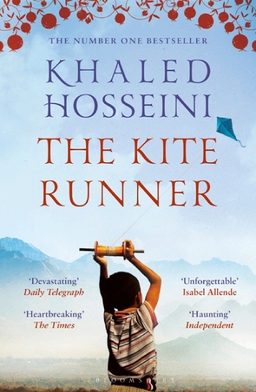
The Kite Runner
Khaled Hosseini
- Pages
- 371
- Focus
- Khaled Hosseini was a physician in California when he wrote The Kite Runner in the pre-dawn hours before his hospital shifts. He had left Kabul as a teenager, never expecting the Taliban and never expecting the love story with his homeland that would consume him. The novel is structured around a single act of cowardice — Amir's failure to help his best friend Hassan during a brutal assault in an alley — and the weight that act places on the next twenty-five years of his life. It is a book about guilt, redemption, and whether it's possible to truly undo what you failed to do. Published 2003. Translated into 70 languages. The book that made a generation understand Afghanistan before, during, and after the Taliban — through a story of two boys flying kites.
- Best for
- Anyone who wants to understand Afghanistan through its people rather than its politics. Readers who want a redemption arc that earns its resolution rather than manufacturing it. People who think historical fiction can't hit as hard as literary fiction. The book that proved a debut novel from a physician could change how millions of people see a country.
- Style
- Redemptive
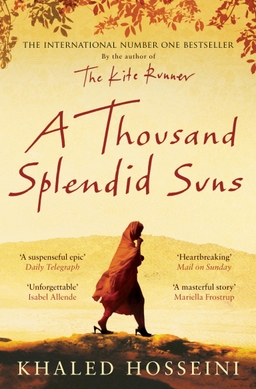
A Thousand Splendid Suns
Khaled Hosseini
- Pages
- 372
- Focus
- Hosseini wrote his second novel in response to one of the most frequently asked questions after The Kite Runner: where were the women? A Thousand Splendid Suns tells the story of two women — Mariam, born illegitimate, and Laila, born with love — whose lives converge in a brutal marriage in Kabul as the city falls from Soviet occupation to civil war to Taliban rule. Where The Kite Runner follows guilt and male friendship, A Thousand Splendid Suns follows endurance and female solidarity. The violence is more direct, the stakes more immediate, the ending more hard-won. Many readers consider it the superior novel. Almost everyone considers it the more devastating one.
- Best for
- Everyone who read The Kite Runner and wanted more. Anyone wanting to understand the lives of Afghan women across fifty years of catastrophic history. Readers who want to feel literature's capacity to make you inhabit lives completely unlike your own. Anyone who can handle being destroyed by a book — and coming out the other side understanding something they couldn't before.
- Style
- Devastating
Similarities
- Same author, same country, same decades. Both novels cover Afghanistan from the 1960s through the early 2000s — Soviet invasion, civil war, Taliban, American bombing. They are companion texts. Reading both gives you one of the most complete pictures of a country's history that literature has produced.
- Love as the measure of everything. Both novels use intimate personal relationships — father and son, two women bound by circumstance — to measure the cost of history. The political is always filtered through the personal. The catastrophe is always human-scale.
- Guilt and sacrifice. Both books are built around a single question: what would you do for someone you love? Both answer it through characters who fail, then try to make it right — or who succeed at an enormous cost.
Differences
- Guilt vs endurance. The Kite Runner is a novel of guilt — Amir's failure and his attempt at redemption drive every page. A Thousand Splendid Suns is a novel of endurance — Mariam and Laila survive through sheer will and the bond between them. Very different emotional journeys.
- Male vs female Afghanistan. Hosseini consciously wrote two different Afghanistans. The Kite Runner is the world of men — kite-flying, male friendship, privilege, cowardice, escape. A Thousand Splendid Suns is the world of women — forced marriage, confinement, violence, the Taliban's specific cruelties. Two sides of the same catastrophe.
- Redemption vs solidarity. The Kite Runner ends with a single act of redemption — one man trying to undo his failure. A Thousand Splendid Suns ends with solidarity — two women who find in each other what the world denied them. Different architecture of hope.
Our Verdict
Read The Kite Runner first — it introduces Hosseini's voice, his Afghanistan, and his emotional vocabulary at slightly lower intensity. Then read A Thousand Splendid Suns, which most readers find more powerful. Together they form a complete portrait of Afghanistan that no amount of news coverage can provide. Read them back-to-back if you can. The second will hit harder for everything the first put in place.
Read both: 14 hours