Harry Potter and the Sorcerer's Stone
J.K. Rowling
The Fellowship of the Ring
J.R.R. Tolkien
Harry Potter and the Sorcerer's Stone
J.K. Rowling
- Pages
- 309
- Focus
- A neglected orphan discovers he's a wizard on his 11th birthday and enters a world of magic hidden inside our own. What begins as a children's school story becomes, across seven books, an epic about death, sacrifice, and the choice between what is right and what is easy. 600 million copies sold. The best-selling book series in history. The reason an entire generation learned to love reading.
- Best for
- Everyone. Literally everyone. If you've never read it, you're not 'too old' — adults who discover Harry Potter for the first time consistently say it's one of the best reading experiences of their lives. If you have kids, read it to them. If you don't, read it to yourself. The magic works at any age.
- Style
- Warm
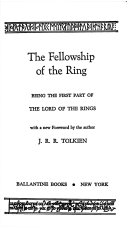
The Fellowship of the Ring
J.R.R. Tolkien
- Pages
- 423
- Focus
- A hobbit inherits a ring that contains the concentrated evil of a fallen god, and must carry it across a continent to destroy it in the volcano where it was forged. Published in 1954 by an Oxford linguistics professor who invented entire languages before writing the story. 150 million copies of Lord of the Rings sold. The book that INVENTED modern fantasy — elves, dwarves, orcs, dark lords, quests. Everything came from here.
- Best for
- Readers who want to lose themselves in the deepest, most fully realized imaginary world ever created. Tolkien didn't just write a story — he built languages, histories, genealogies, and mythologies spanning thousands of years. If you loved the Peter Jackson films ($2.9B combined), the books are ten times richer.
- Style
- Mythic
Similarities
- Both feature the most unlikely hero imaginable — a neglected boy in a cupboard, a three-foot-tall creature who's never left his village — proving that the greatest stories begin with the smallest people in the biggest trouble
- Both built the two most beloved fictional universes of all time, with fanbases that span generations, continents, and languages. Hogwarts and Middle-earth are places that feel more real to their readers than many real places they've visited
- Both are fundamentally about the same thing: ordinary people choosing courage over comfort, friendship over power, and doing what's right when doing nothing would be easier. The moral architecture is identical — evil is seductive, power corrupts, and love (in all its forms) is the only force stronger than death
- Both were written by British authors drawing on deep wells of English myth, folklore, and language — Tolkien explicitly, Rowling implicitly. Both books feel rooted in the landscape and culture of Britain in ways that American fantasy rarely achieves
- Both became billion-dollar film franchises that introduced the stories to audiences who never read the books — and in both cases, the books remain vastly better. Peter Jackson's Lord of the Rings ($2.9B) and the Harry Potter films ($7.7B) are among the most successful adaptations in cinema history, yet readers universally say: the book is richer
Differences
- The reader experience is completely different. Harry Potter is a PAGE-TURNER — Rowling writes with the pacing of a thriller, and each book is designed to be unputdownable. You'll finish Sorcerer's Stone in a day. Lord of the Rings is a JOURNEY — Tolkien writes with the rhythm of myth, and there are passages of songs, poetry, and landscape description that slow you down deliberately. You'll finish Fellowship in a week. Neither approach is better — but know which one you're walking into
- Harry Potter is set in OUR WORLD with magic hidden inside it — Platform 9¾, the Ministry of Magic under London, Diagon Alley behind a pub. This makes it instantly relatable. Middle-earth is a WHOLLY INVENTED WORLD with its own geography, calendar, languages, and 7,000 years of history. This makes it more immersive but more demanding. One is a secret door in a familiar house; the other is an entirely different planet
- Rowling writes for readers aged 9 to 99 — her prose is clean, modern, and invisible. You never notice the writing because you're absorbed in the story. Tolkien writes for readers who love LANGUAGE itself — his prose is archaic, rhythmic, and sometimes deliberately difficult. Some readers find it beautiful; others find it slow. This is the single biggest factor in which book you'll prefer
- Harry Potter is a COMING-OF-AGE story — Harry grows from 11 to 17 across seven books, and the themes mature with him (death, loss, prejudice, political corruption). Lord of the Rings is a MYTHIC QUEST — Frodo doesn't really 'grow up' the way Harry does; instead, he endures, suffers, and is changed by the burden he carries. Harry's arc is about becoming who you're meant to be. Frodo's arc is about sacrificing who you are
- Scope and commitment: Sorcerer's Stone is 309 pages and completely self-contained — you can read just this book and have a satisfying experience (though you won't stop). The full series is 4,224 pages across 7 books. Fellowship of the Ring is 423 pages but it's the first third of one continuous story — you MUST read all three volumes (1,178 pages total). The full Tolkien experience (including The Hobbit and The Silmarillion) is 2,500+ pages. One is a TV series you can sample; the other is a commitment
Our Verdict
Don't let anyone tell you one is 'better' — they do different things for different readers. If you want to fall in love with reading (or remind yourself why you love it), start with Harry Potter. Sorcerer's Stone is 309 pages of pure joy — a book that makes you believe in magic not because of the spells, but because of how it makes you feel. You'll know within 50 pages whether you're going to read all seven. If you want to fall into the deepest, most complete imaginary world ever built, start with The Fellowship of the Ring. It's slower and more demanding, but the reward is a world so detailed you could spend years exploring it. Tolkien created something that no other author has matched in 70 years — a complete mythology that feels as old and real as anything in human history. The truth? Read both. Start with whichever calls to you, and eventually read the other. Together they represent the two poles of fantasy literature — warmth and wonder on one side, myth and grandeur on the other. About 13 hours for both opening volumes, and if you read the full series of each: the best 200 hours you'll ever spend with books.