All comparisonsVS
Dracula
Bram Stoker
Frankenstein
Mary Shelley
Dracula
Bram Stoker
- Pages
- 418
- Focus
- Bram Stoker spent seven years researching Eastern European folklore, Transylvanian history, and vampire mythology before writing Dracula in 1897. His monster was not a figure of sympathy. He was empire in reverse — an ancient Eastern predator invading modern Western civilization, draining its women, corrupting its men, threatening the rational Protestant order that Stoker's Victorian readers believed they had built. The novel is structured as a series of journals, letters, and newspaper clippings — an epistolary thriller that builds dread through accumulation. Jonathan Harker's opening chapters at Castle Dracula remain some of the most effective horror writing in the English language. The Count has appeared in more films than any other non-religious fictional character in history.
- Best for
- Readers who want the original — the novel that invented every vampire cliché they've ever seen, and does it better than any adaptation. Anyone interested in Victorian anxieties about empire, sexuality, and foreign invasion. People who think they know the Dracula story and haven't read the book. The source code for an entire genre.
- Style
- Gothic
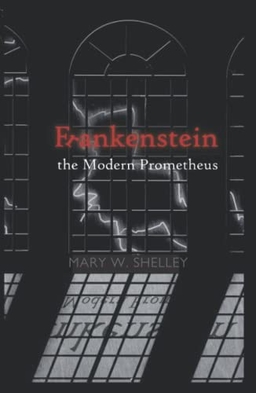
Frankenstein
Mary Shelley
- Pages
- 280
- Focus
- Mary Shelley was 18 years old when she conceived Frankenstein during a ghost story competition at a villa near Geneva in 1816 — the 'Year Without a Summer,' when volcanic ash had darkened the skies and crops had failed across Europe. She was the daughter of two of the most radical thinkers of her era (William Godwin and Mary Wollstonecraft), the lover of Percy Shelley, and about to become one of the most important novelists who ever lived. Frankenstein is not a horror story. It is a novel of ideas: about the ethics of creation, the responsibility of the creator to the created, and the monstrous consequences of ambition without conscience. Victor Frankenstein is the villain. The creature, abandoned and despised, is the moral heart of the book.
- Best for
- Everyone. But especially: scientists, engineers, and technologists who want the oldest meditation on what it means to bring something new into the world. People interested in the ethics of AI, genetic engineering, or any act of creation that raises the question 'just because we can, should we?' The novel that invented science fiction and still asks better questions than anything written since.
- Style
- Philosophical
Similarities
- The monster as mirror. Both novels use their monster to reflect the anxieties of their era back at the reader. Dracula embodies Victorian fears of foreign contamination and female sexuality. Frankenstein's creature embodies Romantic fears of unchecked scientific ambition. The monster is always a self-portrait.
- Founding texts of their genres. Frankenstein invented science fiction. Dracula codified Gothic horror. Everything in both genres traces its DNA to these two books. Reading them is reading the source code.
- Written by outsiders. Stoker was Irish, writing about English anxieties. Shelley was a teenage woman in a world that didn't publish teenage women, writing about male ambition. Both were writing from positions that gave them a clear, unsentimental view of the culture they were criticizing.
Differences
- The monster's nature. Dracula's Count is purely evil — ancient, predatory, unredeemable, without inner life. Frankenstein's creature is purely sympathetic — educated, sensitive, driven to violence only by abandonment and rejection. Entirely opposite moral architectures.
- Horror vs tragedy. Dracula is a thriller — it generates fear, dread, and the satisfaction of evil defeated. Frankenstein is a tragedy — it generates grief, guilt, and the devastating recognition that there are no villains, only failures of responsibility.
- What it fears. Dracula fears what comes from outside — the foreign, the ancient, the uncontrollable Other. Frankenstein fears what comes from inside — our own ambition, our own brilliance, our own inability to love what we create.
Our Verdict
Read Frankenstein for the ideas — it is genuinely one of the most important novels ever written and will make you think about creation, responsibility, and ambition in ways that stay with you for years. Read Dracula for the experience — the slow dread, the rising horror, the satisfaction of a perfectly constructed Victorian thriller. They are complementary in the best way: one gives you a philosophical workout, the other gives you a sleepless night. Both are essential.
Read both: 13 hours