All comparisonsVS
Attached
Amir Levine & Rachel Heller
Hold Me Tight
Sue Johnson
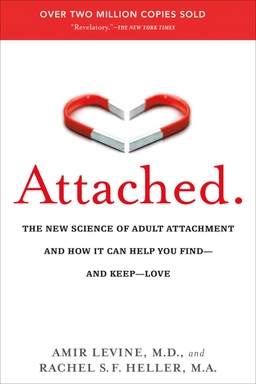
Attached
Amir Levine & Rachel Heller
- Pages
- 304
- Focus
- In the 1960s, British psychiatrist John Bowlby noticed something that nobody had articulated before: human beings are biologically wired for attachment. The need to form close emotional bonds is not weakness or dependency — it is as fundamental as hunger. Levine and Heller applied his research to adult romantic relationships and found three patterns: secure (50%), anxious (20%), and avoidant (25%). Most relationship dysfunction, they argue, is not about incompatibility — it's about attachment style mismatch. The anxious partner needs constant reassurance; the avoidant partner needs space; they often find each other, because anxious activates avoidant, and avoidant activates anxious. Understanding your style doesn't fix everything. But it explains everything. Published 2010. Went viral on TikTok in 2021. One of the most recommended relationship books of the decade.
- Best for
- Anyone who keeps repeating the same relationship patterns and can't understand why. People who feel 'too needy' or 'too independent.' Anyone who has ever been drawn to emotionally unavailable partners. The book that makes the most confusing parts of romantic relationships suddenly legible.
- Style
- Scientific
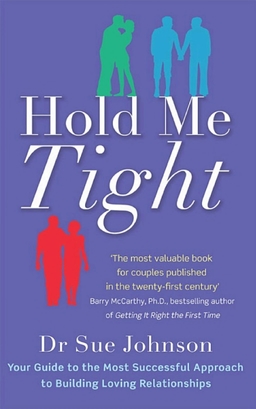
Hold Me Tight
Sue Johnson
- Pages
- 320
- Focus
- Sue Johnson spent 25 years developing Emotionally Focused Therapy — one of the most research-validated couples therapies in existence. Hold Me Tight is her attempt to make it accessible to anyone without a therapist. Her central insight: most couples fight about the surface (dishes, money, sex) when the real fight is always about emotional accessibility and responsiveness. Are you there for me? Can I reach you? Am I safe with you? These three questions, she argues, underlie every conflict in every relationship. When the answer is yes, the relationship is a secure base from which two people can face the world. When the answer is uncertain, every small conflict becomes a threat to the bond. The seven conversations in the book are a road map for moving from disconnection to secure attachment — together.
- Best for
- Couples who want to work on their relationship together. Anyone who has ever had the same argument with their partner seventeen times and wants to understand what it's actually about. People in therapy or considering it. Anyone who wants to understand the emotional architecture of love.
- Style
- Therapeutic
Similarities
- Bowlby's attachment theory at the root. Both books are built on the same scientific foundation: John Bowlby's attachment theory and its application to adult romantic relationships. Both argue that the need for secure emotional connection is biological, universal, and non-negotiable.
- Patterns, not pathology. Neither book treats relationship struggles as personal failure. Both reframe anxiety, avoidance, and conflict as natural responses to unmet attachment needs — understandable, predictable, and changeable.
- Understanding as the first tool. Both books insist that self-knowledge — understanding your own patterns and your partner's — is the prerequisite for change. You can't fix what you can't name.
Differences
- Individual vs couple. Attached is primarily about you: what is your attachment style, how does it drive your behavior, what kind of partner do you seek? Hold Me Tight is primarily about us: how do two people create or repair a secure bond together? Different units of analysis.
- Diagnosis vs therapy. Attached gives you a framework for understanding what has happened in your relationships. Hold Me Tight gives you structured conversations for changing what is happening now. One is a lens; the other is a practice.
- Single vs partnered. Attached is useful whether you're in a relationship or not — it helps you understand patterns across your dating history and make better choices. Hold Me Tight requires a partner willing to do the work alongside you. Different applications, different timing.
Our Verdict
Read Attached first — alone, before any conversation with a partner. It will give you the vocabulary to understand your own patterns and explain them to someone else. Then read Hold Me Tight together, if you're in a relationship that matters. Attached is the map of the terrain. Hold Me Tight is the guide for navigating it with another person. One of the rare cases where reading order genuinely matters.
Read both: 11 hours