Atomic Habits
James Clear
The Power of Habit
Charles Duhigg
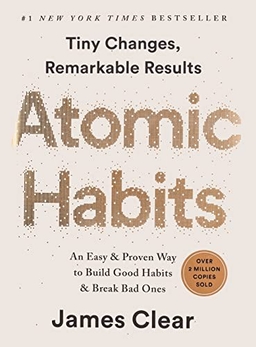
Atomic Habits
James Clear
- Pages
- 320
- Focus
- The book that turned 'habit stacking' into a verb. James Clear spent a decade studying the science of tiny changes and distilled it into a system so practical that people tattoo the Four Laws on their arms. 15 million copies sold. The #1 most-highlighted book on Kindle three years running.
- Best for
- Anyone who has tried to build a habit and failed — runners who quit after week two, writers who can't write daily, smokers who've tried everything. This book doesn't rely on motivation. It redesigns your environment so the right behavior becomes the default.
- Style
- Systematic
The Power of Habit
Charles Duhigg
- Pages
- 371
- Focus
- A Pulitzer Prize-winning journalist investigates why some people and companies transform overnight while others stay stuck. From how Alcoa became the safest company in America (by obsessing over one habit) to how Target knows you're pregnant before your family does — this book reveals the invisible machinery running your life.
- Best for
- Readers who want to understand WHY they do what they do before trying to change it. Especially powerful for managers, leaders, and anyone curious about how habits shape not just individuals but entire organizations and social movements.
- Style
- Investigative
Similarities
- Both are built on the same scientific foundation — the habit loop (cue → routine → reward) discovered by MIT researchers in the 1990s. You'll encounter the same core neuroscience in both books, just framed differently
- Both sold millions of copies by making behavioral psychology genuinely readable — no academic jargon, no lab-coat lectures. Your non-reader friend could finish either one and actually enjoy it
- Both argue the same radical idea: you don't rise to the level of your goals, you fall to the level of your systems. Willpower is unreliable; design is everything
- Both use stories as proof — Clear uses the British cycling team's 1% improvements; Duhigg uses Michael Phelps's pre-race routine, Alcoholics Anonymous's keystone habits, and Rosa Parks's social ties
- Both were written by people who lived this — Clear rebuilt his life after a devastating baseball injury using tiny habits; Duhigg investigated his own cookie addiction at the New York Times to crack the habit code
Differences
- Atomic Habits is a MANUAL — it tells you exactly what to do on page 1 and by page 300 you have a complete system. The Power of Habit is a DOCUMENTARY — it tells you fascinating stories about how habits work, but you have to extract the action steps yourself. One is a recipe; the other is a cooking show
- Clear's framework (Make it Obvious, Attractive, Easy, Satisfying) is so structured you could teach it to a 12-year-old. Duhigg's framework (Identify the Cue, Experiment with Rewards, Isolate the Routine) is more diagnostic — it helps you understand existing habits but gives less scaffolding for building new ones
- Duhigg goes where Clear doesn't: organizational habits (how Paul O'Neill transformed Alcoa by focusing solely on worker safety), social movement habits (how Rosa Parks triggered a boycott through 'weak ties'), and corporate habits (how Target's algorithms predict consumer behavior). Clear stays focused on you, the individual
- Atomic Habits is about IDENTITY — 'Every action is a vote for the type of person you wish to become.' The Power of Habit is about MECHANISM — 'This is the loop in your brain, here's how to rewire it.' One changes who you think you are; the other changes what your neurons do
- Clear wrote his book in 2018, building on Duhigg's 2012 groundwork with six more years of research, reader feedback from his newsletter (2M+ subscribers), and a tighter, more actionable structure. Duhigg broke the ground; Clear built the house
Our Verdict
Here's what most people get wrong: they think these books are interchangeable. They're not. They solve different problems. Read Atomic Habits if you already know what habit you want to build (exercise, writing, reading, meditating) and need a system that actually works. The Four Laws framework is the best habit-building toolkit ever published — full stop. Read The Power of Habit FIRST if you don't even know why you keep doing what you do — why you eat at your desk, why you check your phone 150 times a day, why you always procrastinate on the same tasks. Duhigg's diagnostic approach helps you see the invisible loops before you try to change them. The ideal order: Power of Habit first (understand the machine), then Atomic Habits (reprogram it). Together — about 13 hours of reading that will literally change your daily behavior. Not metaphorically. Literally. These are the two books people point to years later and say: 'That's when things changed.'