The Alchemist
Paulo Coelho
Siddhartha
Hermann Hesse
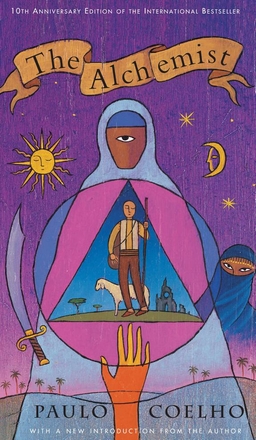
The Alchemist
Paulo Coelho
- Pages
- 197
- Focus
- A shepherd boy in Andalusia has a recurring dream about treasure at the Egyptian pyramids. He sells his sheep and crosses the Sahara to find it. What he discovers is that the journey matters more than the destination — and that 'when you want something, all the universe conspires in helping you achieve it.' 150 million copies sold. The most translated book by a living author. The book that's been pressed into more hands with 'you HAVE to read this' than any other in history.
- Best for
- Anyone at a crossroads — starting a new career, ending a relationship, leaving a country, wondering if they should take the leap. This book doesn't give you answers; it gives you courage. Best read when you're 18 and the world is wide open, or at 40 when you've forgotten it is.
- Style
- Hopeful
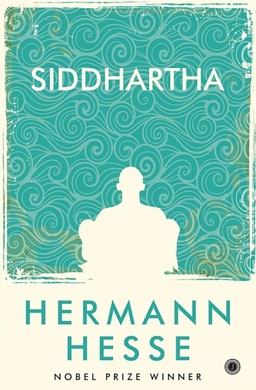
Siddhartha
Hermann Hesse
- Pages
- 152
- Focus
- A young Brahmin leaves his wealthy family, becomes an ascetic, meets the Buddha, becomes a merchant, becomes a lover, becomes a ferryman, and finally — sitting by a river — understands that wisdom can't be taught. Published in 1922 by a German Nobel laureate going through a spiritual crisis, this 152-page novella distills 3,000 years of Eastern philosophy into a story so simple a child could follow it and so deep a monk could study it for a lifetime.
- Best for
- Readers who've read all the self-help books and still feel empty. People returning from a meditation retreat who want something to sustain the feeling. Anyone who suspects that the meaning of life can't be found in a career, a relationship, or an achievement — but isn't sure where else to look.
- Style
- Luminous
Similarities
- Both are short, allegorical novels about a young man who leaves everything familiar to find meaning — and both argue that the finding IS the leaving. Santiago crosses the Sahara; Siddhartha leaves his father's house. Both discover that wisdom lives in experience, not in books or teachers
- Both have been pressed into the hands of millions with the words 'this changed my life' — The Alchemist: 150M copies in 80+ languages. Siddhartha: 50M+ copies. Together they are the two most widely read spiritual fables of the modern era. Both are passed between friends like sacred texts
- Both can be read in a single afternoon (197 and 152 pages) but stay with you for decades — their power is in simplicity. No complex plots, no subplots, no secondary characters that matter. One hero, one journey, one question: what am I meant to do with my life?
- Both were written by authors going through personal crises — Coelho wrote The Alchemist after walking the Camino de Santiago during a period of spiritual searching. Hesse wrote Siddhartha during a psychoanalysis with a Jungian therapist while his marriage and mental health collapsed. Both books are medicine that the authors wrote for themselves first
- Both are simultaneously beloved and dismissed — literary critics mock The Alchemist as naive and Siddhartha as simplistic. Readers don't care. These books work on a level that literary criticism can't reach. They don't argue for wisdom; they create the feeling of it
Differences
- The Alchemist says: FOLLOW YOUR DREAM. The universe will help you. Signs will appear. Obstacles are tests. Your Personal Legend is written in the Soul of the World. It's optimistic, almost magical — the universe is on your side. Siddhartha says: THERE IS NO DREAM TO FOLLOW. All goals are illusions. All teachings are incomplete. The river flows and contains everything. It's serene, almost nihilistic — the universe isn't on your side, because there are no sides
- Coelho writes FABLES — his characters are archetypes (the Shepherd, the Alchemist, the Englishman), his desert is symbolic, and every event has a moral. Hesse writes PHILOSOPHY disguised as fiction — Siddhartha's encounters with the Buddha, the merchant, and the ferryman are philosophical arguments in narrative form. The Alchemist is a fairy tale for adults; Siddhartha is a sutra disguised as a novel
- The Alchemist gives you MOTIVATION — you finish it feeling like you can do anything, like the universe is waiting for you to make the first move. Siddhartha gives you STILLNESS — you finish it feeling like there's nothing you need to do, nowhere you need to go. One makes you want to start a journey; the other makes you realize you've already arrived
- Intellectual depth: The Alchemist operates on one level — it says what it means and means what it says. You get it on first reading. Siddhartha operates on multiple levels — the surface story is simple, but underneath it's engaging with 3,000 years of Hindu and Buddhist philosophy (Maya, samsara, the unity of Atman and Brahman). You can read it five times and find new layers each time
- The Alchemist is for the BEGINNING of a spiritual journey — when you need permission to dream and courage to start. Siddhartha is for a LATER stage — when you've achieved things, tried paths, followed teachers, and suspect that the answer was never in any of them. One is sunrise; the other is sunset. Both are beautiful, but they speak to different moments in life
Our Verdict
Read The Alchemist when you need a push. When you're standing at the edge of something — a new career, a move, a relationship, a creative project — and you need someone to whisper: 'Go. The universe will catch you.' It's 197 pages of pure courage, and it works every time. Don't listen to the critics who call it simple — simple is the point. Some truths don't need complexity. Read Siddhartha when you need peace. When you've done the chasing, achieved the goals, followed the gurus — and something still feels missing. Hesse's answer — that wisdom comes from the totality of experience, not from any single teacher or path — is the quietest and most profound idea in this book. The river scene at the end is one of the most beautiful passages in all of literature. Together: about 6 hours. The shortest pair on this list, and for many readers, the most life-changing. One gives you wings; the other teaches you that you were already flying.