1984
George Orwell
Brave New World
Aldous Huxley
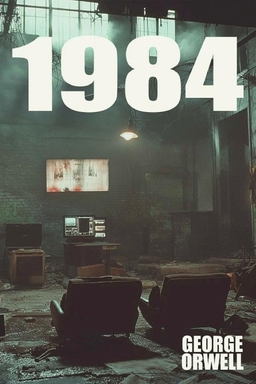
1984
George Orwell
- Pages
- 328
- Focus
- Big Brother is watching. Written in 1949, Orwell's nightmare predicted surveillance states, thought police, and the weaponization of language with terrifying accuracy. The phrases 'Big Brother,' 'doublethink,' 'thoughtcrime,' and 'Newspeak' all came from this book — and entered everyday language because reality kept catching up with the fiction.
- Best for
- Anyone living in a world of government surveillance, media manipulation, and 'alternative facts' — so, basically, everyone in 2026. If you've ever watched a politician deny something that was recorded on camera and wondered how we got here, this book was written for you 77 years ago.
- Style
- Suffocating
Brave New World
Aldous Huxley
- Pages
- 311
- Focus
- What if the government didn't need to oppress you — because you were too entertained to care? Written in 1932, Huxley imagined a world of genetic engineering, mood-stabilizing drugs (soma), and recreational sex as social control. No one burns books because no one wants to read them. The dystopia you choose voluntarily.
- Best for
- Anyone who has ever spent four hours scrolling their phone and felt vaguely empty afterward. If Orwell warns about the things we fear, Huxley warns about the things we love — and that second warning hits harder in the age of TikTok, streaming, and algorithm-fed dopamine.
- Style
- Seductive
Similarities
- Both are the two most important dystopian novels ever written — published 17 years apart (1932 and 1949), they define the two fundamental ways a society can lose its freedom. Every dystopia since borrows from one or both
- Both feature a protagonist who wakes up inside the machine — Winston Smith in 1984 and Bernard Marx in Brave New World both see through the illusion, and both discover that seeing the truth doesn't mean you can escape it
- Both are terrifyingly relevant in 2026 — facial recognition, social credit scores, and state censorship validate Orwell. Infinite streaming, social media addiction, and antidepressant prescriptions validate Huxley. The question isn't which was right — it's which scares you more
- Both were written by Englishmen warning about modernity — Orwell feared Stalin's Soviet Union and the machinery of fascism. Huxley feared Henry Ford's assembly line and America's worship of consumption. Both saw the monster of their era and extrapolated it to its logical extreme
- Both are short enough to read in a weekend but unsettling enough to think about for years — 1984 is 328 pages, Brave New World is 311. Neither wastes a sentence. You'll finish each in 5-6 hours and spend weeks seeing the world through their lens
Differences
- The MECHANISM of control is opposite. 1984: pain, fear, surveillance, deprivation — the government makes you suffer until you obey. Brave New World: pleasure, entertainment, drugs, sex — the government makes you so comfortable you never want to rebel. Orwell feared the things that would destroy us. Huxley feared the things that would delight us
- In 1984, truth is MURDERED — the Ministry of Truth rewrites history, 2+2=5 if the Party says so, and reality itself is controlled. In Brave New World, truth is DROWNED — no one lies to you, but there's so much noise, entertainment, and sensation that nobody bothers with truth anymore. One kills information; the other makes it irrelevant
- 1984 is a PRISON — you feel claustrophobic reading it. Gray walls, telescreens in every room, the smell of cabbage and old boots. Brave New World is a RESORT — it's bright, clean, everyone is beautiful, and there's a pill for every bad feeling. Orwell's dystopia is obviously horrible. Huxley's is insidious because it looks like paradise
- The endings hit differently. 1984 ends with absolute defeat — 'He loved Big Brother.' It's one of the most devastating final lines in literature. Brave New World ends with a different kind of defeat — John the Savage rejects the brave new world but can't survive outside it either. Orwell says: they will break you. Huxley says: there's nowhere to run
- Neil Postman nailed the difference in 'Amusing Ourselves to Death' (1985): 'Orwell feared those who would ban books. Huxley feared there would be no reason to ban a book, for there would be no one who wanted to read one. Orwell feared those who would deprive us of information. Huxley feared those who would give us so much that we would be reduced to passivity and egotism.'
Our Verdict
Read both. Not because it's the diplomatic answer, but because together they form the complete map of how freedom dies. 1984 shows you the version that arrives with boots and guns — and if you live in or near an authoritarian regime, it will feel less like fiction and more like reportage. Brave New World shows you the version that arrives with a smile and a pill — and if you've ever wondered why you feel vaguely numb despite having more entertainment options than any generation in history, Huxley has your answer. The reading order doesn't matter, but here's a suggestion: read 1984 first (it's faster, more gripping, and more immediately terrifying), then Brave New World (it's slower, more philosophical, and the horror creeps in rather than hits you). Together: about 12 hours. You'll never look at a news broadcast or a smartphone the same way again.